Meta Description: Discover Kashmir's rich winter traditions through its iconic attire like Pheran & exquisite Pashmina. Learn about local crafts and where to find authentic pieces.
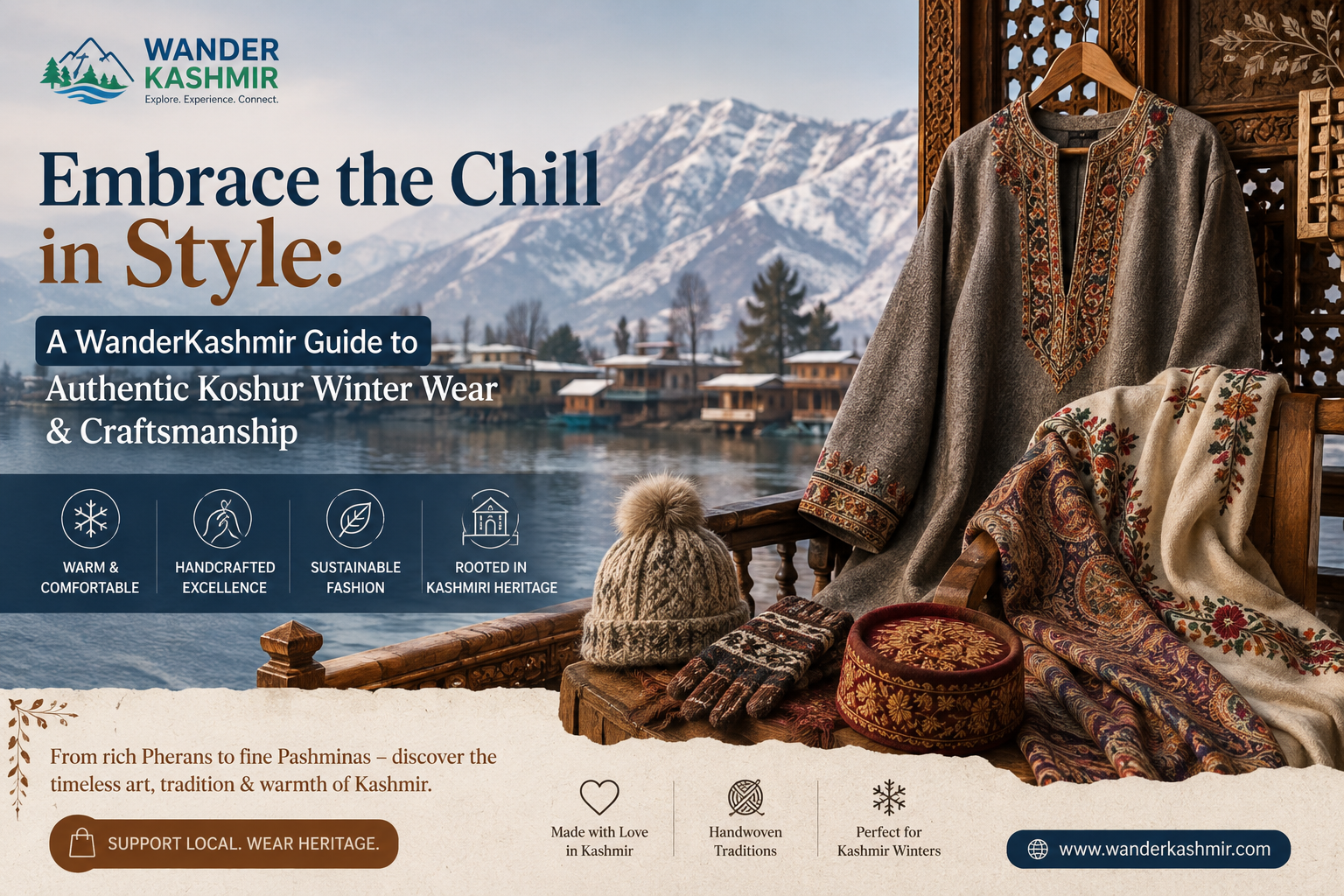
Embrace the Chill in Style: A WanderKashmir Guide to Authentic Koshur Winter Wear & Craftsmanship
Kashmir, a land painted white in winter's embrace, beckons with its serene beauty. But beyond the snow-capped peaks and frozen Dal Lake, lies a vibrant culture of warmth, resilience, and unparalleled artistry. As a local Kashmiri, I want to share a secret to truly experiencing our winters: embracing the authentic Koshur (Kashmiri) style and the exquisite craftsmanship that keeps us cozy and chic. This isn't just about clothes; it's about a way of life, woven into every thread and carved into every piece.
Quick Information
| Feature | Details |
|---|---|
| Ideal for | Culture enthusiasts, shoppers, winter travelers, craft lovers, slow tourism |
| Best Time | October to March (for winter wear), year-round for craftsmanship appreciation |
| Key Highlights | Pheran, Pashmina, Kani Shawls, Gabba, Namda, Walnut Wood Carving, Papier-mâché |
Table of Contents
- The Soul of Koshur Winter: Understanding the Pheran
- More Than Just a Garment: History & Significance
- Styling Your Pheran: Modern Takes & Traditional Charm
- The Jewel of Kashmir: Pashmina & Shawl Craftsmanship
- From Fibre to Fashion: The Intricate Process
- Identifying Authentic Pashmina: Tips from a Local
- Other Exquisite Shawls: Kani, Embroidered & More
- Warmth Beyond Attire: Exploring Other Koshur Winter Crafts
- Gabba & Namda: Felted Rugs with a Story
- Papier-mâché: A Splash of Color
- Walnut Wood Carving: Art from Nature
- Where to Find Authentic Koshur Treasures
- Srinagar's Old City: Shehr-i-Khas & Local Markets
- Visiting Artisan Villages: A Deeper Dive
- Practical Tips for Your Winter Craft Shopping
The Soul of Koshur Winter: Understanding the Pheran
The Pheran isn't merely a piece of clothing; it's an emblem of Kashmiri identity and a testament to our ingenious way of combating the biting cold. This traditional long, loose-fitting gown, worn by both men and women, is the first layer of warmth you'll notice on any Kashmiri during winter.
More Than Just a Garment: History & Significance
Historically, the Pheran, often made of tweed or wool, served as an all-in-one insulation system. Its loose design allowed for a Kangri – a traditional earthenware pot filled with hot embers – to be carried underneath, providing personal warmth even in freezing temperatures. While the Kangri's use has evolved, the Pheran remains an indispensable part of our winter wardrobe, evolving in styles and fabrics but retaining its core warmth and cultural significance. It’s a garment that tells tales of generations, of resilience, and of enduring beauty.
Styling Your Pheran: Modern Takes & Traditional Charm
Today, Pherans come in a delightful array of fabrics, from traditional plain wool to intricately embroidered velvet and silk. For women, designs range from heavily embroidered floral patterns (Tilla work) around the neck and cuffs to simpler, elegant pieces. Men's Pherans are typically plainer, made from wool or tweed. Don't be shy to embrace this local attire! Many visitors now purchase Pherans as stylish, comfortable outerwear, perfect for a leisurely stroll around Dal Lake or a cozy evening by a Bukhari (traditional heater). Wearing one is a direct immersion into our local culture.
The Jewel of Kashmir: Pashmina & Shawl Craftsmanship
When one speaks of Kashmiri craftsmanship, Pashmina immediately comes to mind. This luxurious wool, sourced from the Changthangi goat high in the Himalayas, is synonymous with Kashmir's artistic legacy.
From Fibre to Fashion: The Intricate Process
The journey of a Pashmina shawl is one of painstaking effort and generational skill. The fine goat hair is meticulously hand-combed, cleaned, spun into incredibly thin yarn, and then hand-woven on traditional looms. This delicate process, passed down through families for centuries, is what gives Pashmina its unparalleled softness, warmth, and ethereal lightness. From plain weaves to intricate Kani work or exquisite embroidery, each piece is a labor of love.
Identifying Authentic Pashmina: Tips from a Local
Sadly, the market is flooded with fakes. As a local, I urge you to be discerning.
- The Feel: Authentic Pashmina is incredibly soft to the touch, almost buttery, but not slippery. It has a slight natural lustre, not an artificial sheen.
- The Weave: Due to hand-weaving, a true Pashmina may have minor imperfections or slight unevenness in the weave when held up to the light. Perfectly uniform weaves often indicate machine production.
- The Ring Test (with caution): A pure, finely woven Pashmina can often pass through a small ring due to its incredible fineness. However, don't force it, as even genuine Pashmina can snag if not carefully handled.
- Price: Real Pashmina is expensive. If the price seems too good to be true, it likely is.
- Certification: Look for quality certifications, but more importantly, buy from reputable, established stores or directly from artisans.
Other Exquisite Shawls: Kani, Embroidered & More
Beyond pure Pashmina, Kashmir boasts other incredible shawls. The Kani shawl, woven using small wooden needles (kanis), is a masterpiece of intricate patterns, often taking years to complete. Embroidered shawls feature Sozni (fine needlework), Aari (hook work), and Tilla (gold/silver threadwork), each adding its unique texture and story. These are not just accessories; they are wearable art, embodying centuries of artistic tradition.
Warmth Beyond Attire: Exploring Other Koshur Winter Crafts
Kashmir's artistry extends far beyond clothing, finding expression in a myriad of crafts that bring warmth and beauty into homes.
Gabba & Namda: Felted Rugs with a Story
Walk into a traditional Kashmiri home, and you’ll likely find Gabba or Namda on the floor. Gabba are recycled woolen blankets or old shawls stitched together and embroidered, creating vibrant, durable floor coverings. Namda, on the other hand, are felted rugs made by pressing and matting wool without weaving. Both add incredible warmth and a rustic charm, often adorned with traditional motifs. They are perfect souvenirs, bringing a piece of Kashmiri comfort to your own home.
Papier-mâché: A Splash of Color
The art of Papier-mâché is an ancient Kashmiri craft, transforming recycled paper pulp into stunning, often vividly painted objects. From delicate boxes and intricately decorated lamps to animal figurines, each piece is hand-painted with traditional Chinar (plane tree) leaves, flowers, or intricate geometric patterns. They are a burst of color against the snowy backdrop of winter.
Walnut Wood Carving: Art from Nature
Kashmir is renowned for its walnut wood carving, a craft that turns simple wood into exquisite decorative pieces. The rich, dark wood is meticulously carved into tables, screens, jewelry boxes, and intricate wall hangings, often depicting flora and fauna native to the region. The skill involved in creating these detailed designs is truly mesmerizing.
Where to Find Authentic Koshur Treasures
Finding genuine Kashmiri crafts is an adventure in itself. While many shops dot the tourist hubs, a truly authentic experience takes you deeper into the heart of Shehr-i-Khas (Srinagar's Old City) and beyond.
Srinagar's Old City: Shehr-i-Khas & Local Markets
The labyrinthine alleys of Srinagar's Old City are the true treasure trove. Explore areas around Zaina Kadal, Habba Kadal, and Fateh Kadal. Here, you'll find small, family-run shops and workshops where artisans have been perfecting their craft for generations. Engage with the shopkeepers; many are passionate about their products and happy to share stories. Take your time, sip on a warm Kahwa, and soak in the atmosphere. For a truly curated experience that navigates these bustling markets with local insights, consider booking an exclusive cultural shopping tour with WanderKashmir.
Visiting Artisan Villages: A Deeper Dive
For a more immersive experience, venture out to villages renowned for specific crafts. Certain villages specialize in Pashmina weaving, others in walnut wood carving or papier-mâché. Visiting these communities allows you to witness the creation process firsthand and purchase directly from the artisans, ensuring authenticity and supporting local livelihoods. WanderKashmir can help you plan your trip to Kashmir's craft villages seamlessly; book your taxi with WanderKashmir for a comfortable and reliable journey, ensuring you reach these hidden gems with ease.
Practical Tips for Your Winter Craft Shopping
Bargaining Etiquette
Bargaining is a part of the shopping culture, especially in local markets. However, always do so respectfully and gently. Start with a reasonable offer and be willing to meet halfway. Remember, these are often handcrafted items representing hours, days, or even years of labor.
Supporting Local Artisans
When you buy directly from artisans or small, family-run establishments, you're not just acquiring a beautiful piece; you're contributing directly to the sustenance of these ancient crafts and the families who keep them alive. It’s an investment in Kashmir’s heritage.
Packing Your Precious Finds
Pashmina shawls are delicate; pack them carefully. Papier-mâché can be fragile; ensure they are well-wrapped. Most reputable shops will provide excellent packaging. If you're staying in a verified local homestay via WanderKashmir, your hosts can often provide valuable advice on packaging and shipping your purchases home.
Embracing Kashmir's winter goes beyond sightseeing; it’s about experiencing its heart and soul. By donning a Pheran, wrapping yourself in a genuine Pashmina, or adorning your home with local crafts, you carry a piece of our timeless beauty with you. Let WanderKashmir guide you through this journey of cultural immersion and discovery. Plan your authentic Kashmiri winter experience today, and let the warmth of our traditions envelop you.